Carlisle stands as the historic county town of Cumbria, positioned near the English border with Scotland. The city offers visitors and residents a compact centre where centuries of history remain visible within a walkable area.
Carlisle Castle
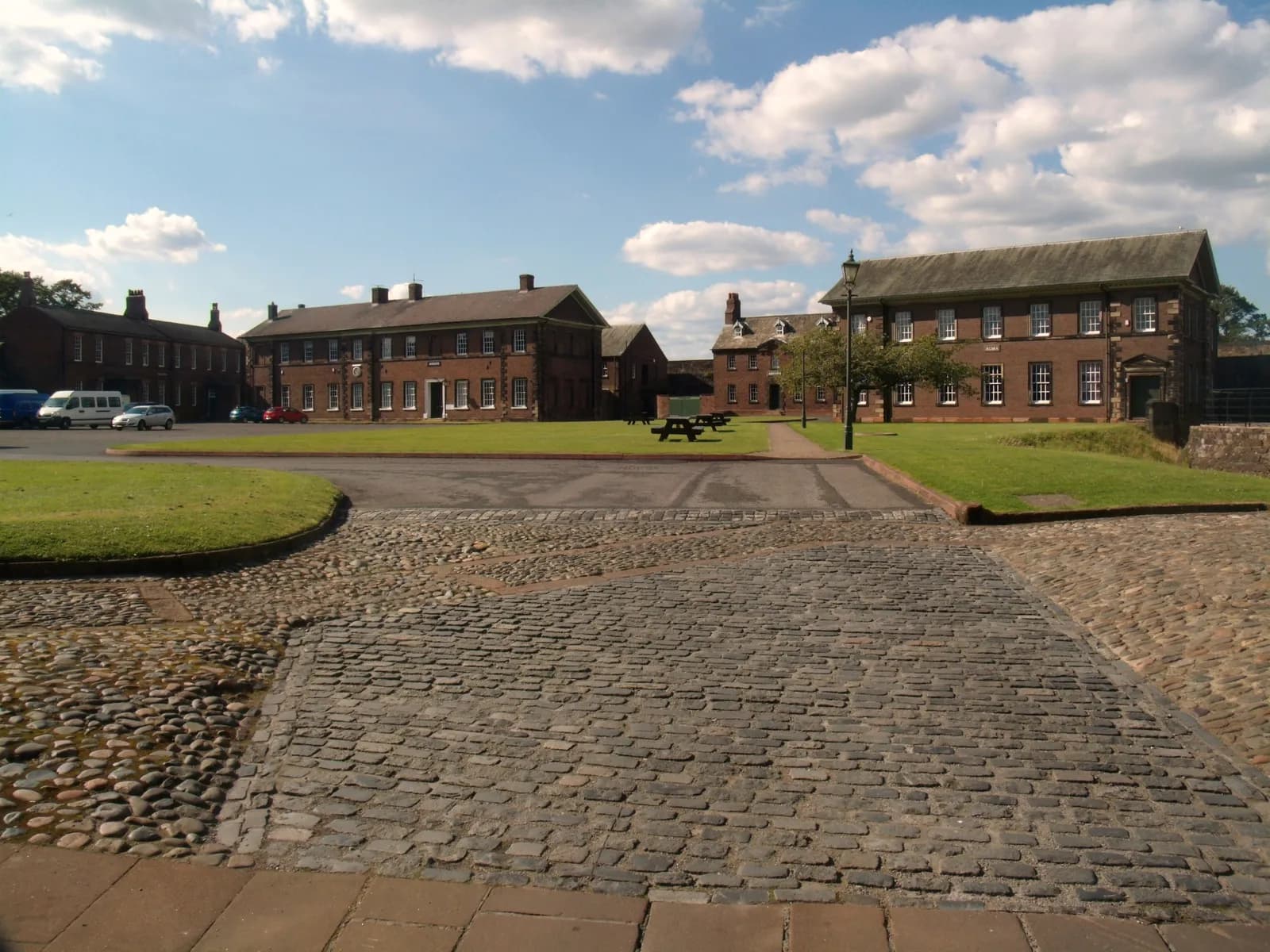
Carlisle Castle dominates the city's northern edge and ranks among England's best-preserved medieval fortifications. William II began construction in 1092, establishing the site as a strategic stronghold during centuries of Anglo-Scottish conflict. The castle retains its outer walls, keep, and internal buildings including the half-moon battery, a later addition to the defences. English Heritage manages the site, which opens to visitors throughout the year. The castle also served as a prison; Mary, Queen of Scots was held here in 1568.
Carlisle Cathedral
The Cathedral Church of the Holy and Undivided Trinity, commonly known as Carlisle Cathedral, sits at the heart of the city. Founded as an Augustinian priory in 1122, it became a cathedral when Henry I created the diocese of Carlisle in 1133. The building suffered damage during the Civil War when Scottish troops under General Leslie captured the city in 1640, using the nave to house horses and removing wood for fuel. The surviving choir and transepts display fine Gothic architecture, with the east window representing one of the cathedral's notable features. The building continues to serve as the seat of the Bishop of Carlisle.
The Citadel
The Citadel stands at the southern entrance to the city centre, consisting of two imposing towers originally built as a courthouse and prison. The current structures date from 1810, replacing earlier medieval buildings on the same site. The towers now house criminal court proceedings, maintaining their judicial function nearly two centuries after construction.
Tullie House Museum
Tullie House operates as Carlisle's principal museum and art gallery, located within a historic Jacobean building near the castle. The institution holds collections documenting the region's history from Roman occupation through the present day. Exhibits include artefacts from the nearby Hadrian's Wall, Victorian-era displays, and rotating contemporary art exhibitions. The building itself represents an important example of early 17th-century domestic architecture.
Hadrian's Wall Connection
Carlisle serves as a gateway to Hadrian's Wall, the 73-mile Roman fortification stretching coast to coast across northern England. The city sits near the western terminus of the wall, with several sections of the original structure and associated forts accessible within short driving distance. The wall, built around AD 122 during Emperor Hadrian's reign, stands as a UNESCO World Heritage Site and represents one of Britain's most significant archaeological monuments.
City Centre Layout
Carlisle's centre follows a medieval street pattern with the castle and cathedral forming anchors at either end of the main thoroughfare. The pedestrianised shopping streets concentrate around the historic market place, with the Lanes area offering independent shops and businesses. The city maintains regular markets, continuing a tradition established by royal charter in the medieval period.
Transport Links
Carlisle functions as a major transport interchange, with the railway station offering direct services to Glasgow, Edinburgh, Newcastle, Manchester, and London. The city sits at the meeting point of the M6, A69, and A7 roads, making it accessible from all directions. Local bus services connect the centre with surrounding towns and villages throughout Cumbria.
Practical Information for Visitors
The compact nature of Carlisle's historic centre makes it suitable for walking tours. The castle and cathedral lie within ten minutes' walk of each other, with the museum situated between them. Several independent cafes and restaurants operate within the pedestrianised core. For those extending their visit, the Lake District National Park lies approximately thirty miles to the south, accessible by road or rail.