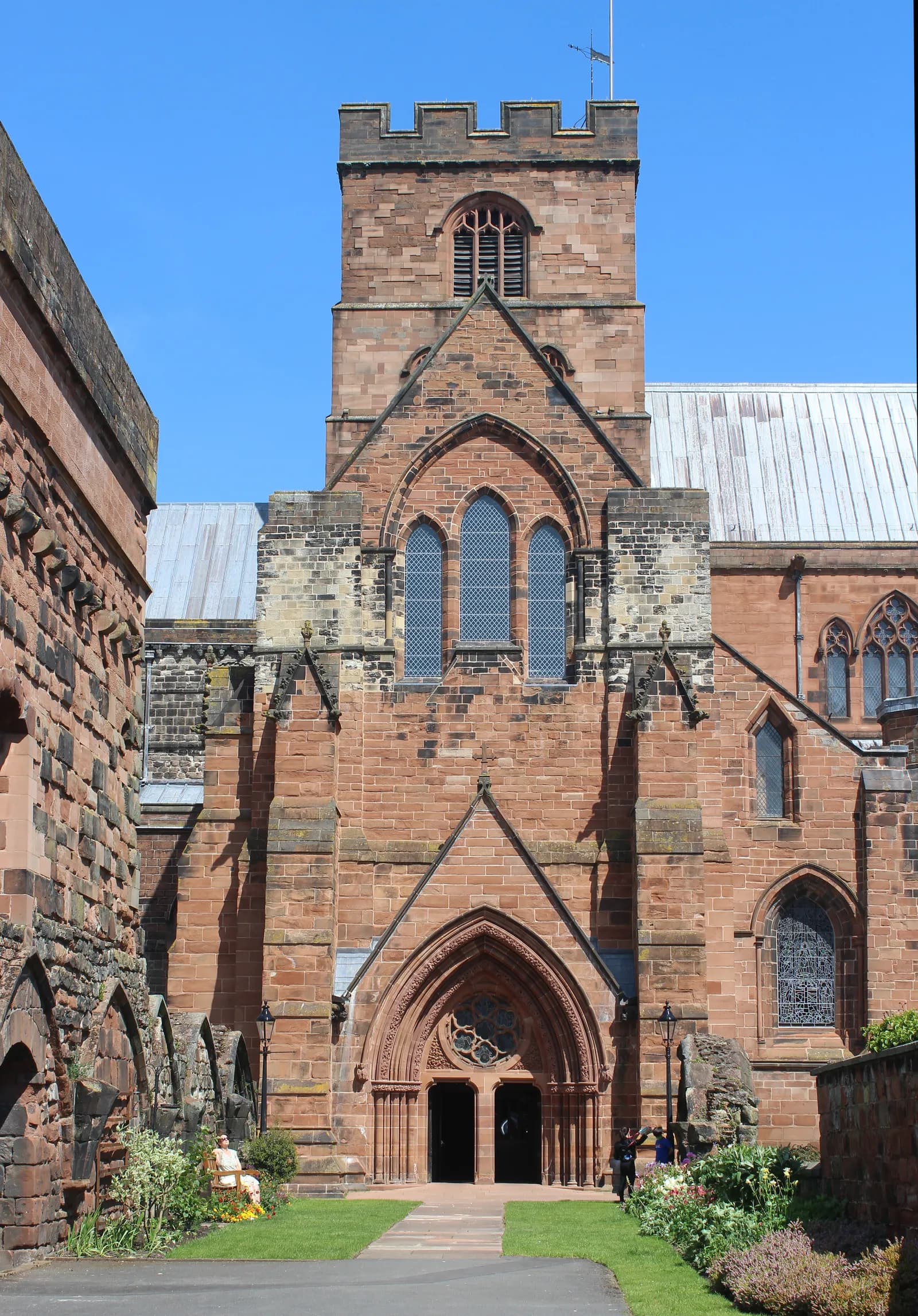
Carlisle Magazine arrives at a pivotal moment for Cumbria's only city. With a population of 77,730 and a history stretching back nearly two millennia, Carlisle stands as England's northernmost cathedral city: a place where Roman foundations meet medieval fortifications, and where the border with Scotland has shaped every chapter of its story.
This publication emerges to fill a distinct gap in the local media landscape. While BBC Radio Cumbria reaches 80,000 weekly listeners and the News & Star has long covered hard news and Carlisle United FC, there remains space for in-depth features that explore the city's heritage, celebrate its present, and examine its future. Carlisle Magazine intends to occupy that space.
A City Forged by Its Position
Carlisle's identity has always been inseparable from its geography. Located just eight miles south of the Anglo-Scottish border, the city has served for centuries as both gateway and fortress. The Romans established a timber fort here in AD 73, naming their settlement Luguvalium. Archaeological evidence confirms this was among the earliest Roman military installations in Britain.
The medieval period brought further fortification. William II ordered the construction of Carlisle Castle in 1092, and it was rebuilt in stone three decades later. The fortress gained particular notoriety in 1568, when Mary, Queen of Scots was imprisoned within its walls. The castle remains under the care of English Heritage and now houses Cumbria's Museum of Military Life.
Henry VIII added the Citadel in 1541, a pair of Grade I listed towers that served variously as fortress, prison, and courts. The structure stands as a reminder of Carlisle's strategic importance during the turbulent centuries of Anglo-Scottish conflict. The city was, according to historical records, the last English fortress to undergo siege: this occurred in 1745 during the Jacobite rising.
Spiritual and Cultural Heart
Carlisle Cathedral, founded as an Augustinian priory in 1122 and elevated to cathedral status eleven years later, serves as the seat of the Diocese of Carlisle. Though the second smallest ancient cathedral in England by floor area, it contains the largest Flowing Decorated Gothic window in the country, measuring 51 feet by 26 feet. The building carries Grade I listed status and remains an active place of worship alongside its cultural significance.
Tullie House Museum and Art Gallery provides another anchor for the city's cultural life. Established in 1893 and housed in a Grade I listed building, the institution holds collections spanning Roman archaeology, Viking artefacts, and Border Reivers history. Following a multimillion-pound redevelopment, Tullie House reopened on 26 April 2025. The museum attracted 240,000 visitors in 2018, according to the most recent figures available.
A Railway Town
The Victorian era transformed Carlisle into a railway powerhouse. Carlisle railway station opened in 1847 and, at its peak, served as the junction for seven separate railway companies. The Grade II* listed building retains eight platforms and recorded 2.316 million passenger journeys in 2024/25. The city once hosted Europe's largest marshalling yard at Kingmoor, though this has since diminished in scale.
This railway heritage connects to a broader industrial past. Shaddon Mill, which operated in the city, once contained the world's eighth-tallest chimney. Engineering firms including Carr's of Carlisle, Kangol, and Metal Box provided significant local employment through much of the twentieth century. The modern economy has shifted toward service industries, with United Biscuits and Pirelli maintaining notable presences.
The Media Landscape
Carlisle's media ecosystem includes established institutions with deep local roots. ITV Border, headquartered in the city since its launch on 1 September 1961, covers Cumbria alongside Dumfries and Galloway and the Scottish Borders. The station merged with ITV Tyne Tees in 2009 but restored full regional news programming in September 2013.
BBC Radio Cumbria began broadcasting in 1973 as BBC Radio Carlisle, adopting its current name in 1982. The station's studios remain in the city, and it commands an 8.4% audience share as of May 2025. The News & Star, owned by Newsquest Media Group, continues to provide daily coverage of local affairs, while In-Cumbria focuses on business journalism.
What This Magazine Will Do
Carlisle Magazine enters this environment with a specific remit. The publication will prioritise long-form journalism and thoughtful analysis over breaking news. It will examine the city's built heritage, its cultural institutions, and the people who shape its character. It will explore the practical challenges facing residents: from infrastructure and planning to flooding and environmental concerns. The city experienced significant flooding in November 2025, and the council published its Wigton flood report in May 2026.
The magazine will also look beyond the immediate city boundaries. Carlisle functions as the commercial and administrative centre for Cumberland, following the establishment of the unitary authority in 2023. Its role within the wider Cumbria Combined Authority, which agreed £4 million in funding for the Tour de France in June 2026, affects the entire region.
Looking Forward
Recent developments suggest a city in transition. The Tullie House reopening represents a significant cultural investment. The Carlisle Market Hall, listed for auction at a guide price of £1.95 million, may yet find new purpose. Port Carlisle's holiday park has received redevelopment approval, and new businesses continue to emerge: Pie Demand opened a kiosk at the railway station in 2025, while Enterprising Cumbria secured an additional £1.5 million in government funding the same year.
Carlisle Magazine will document these changes without exaggeration or promotional language. It will treat press releases as claims requiring independent verification where possible. It will acknowledge uncertainty where facts remain unconfirmed. Above all, it will respect the intelligence of its readers and the complexity of the city it serves.
This is a publication built on the understanding that local journalism matters, that Carlisle's story deserves sustained attention, and that the border city's next chapter is still being written.