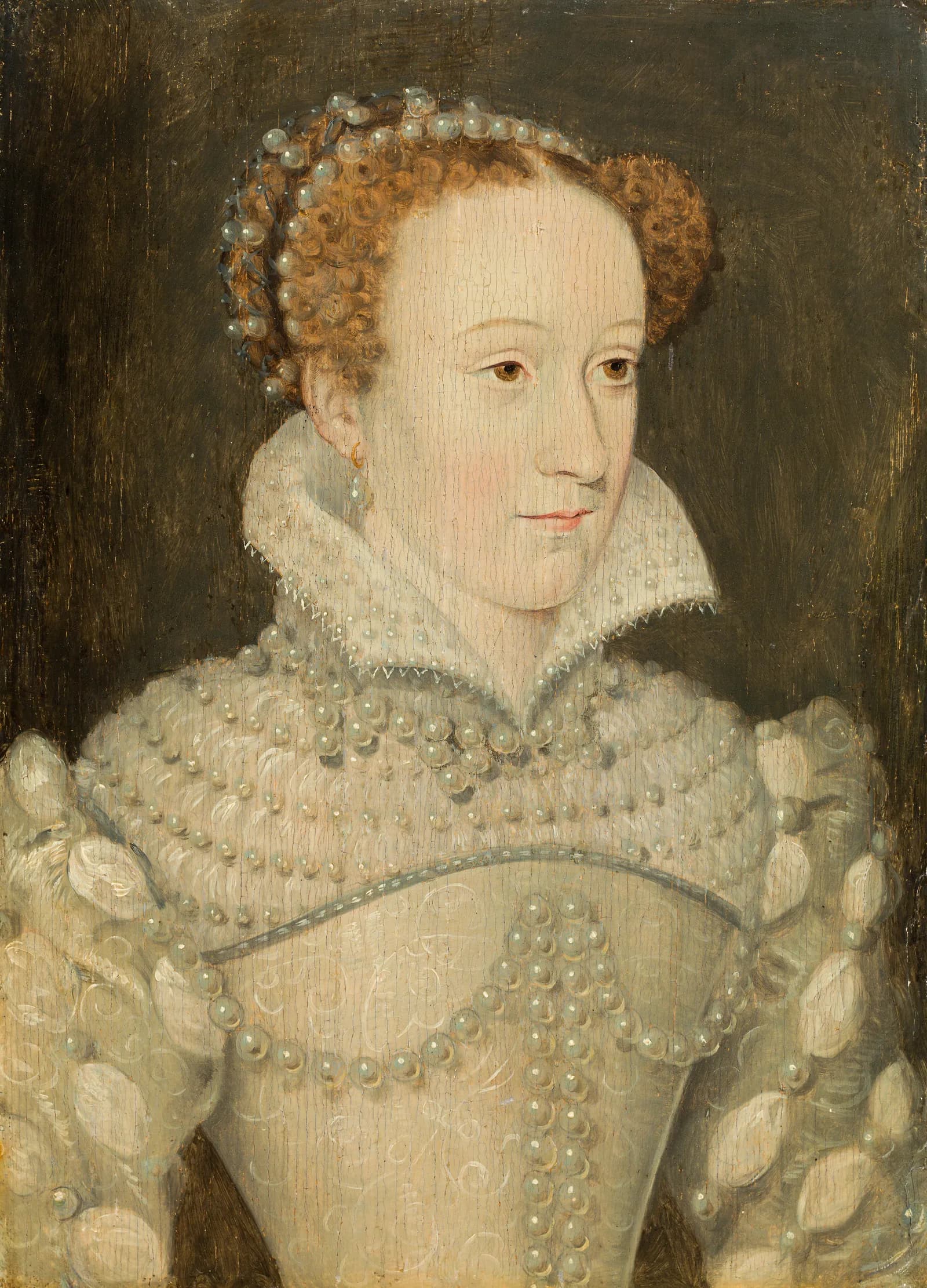
On 18 May 1568, a small party arrived at Carlisle Castle seeking refuge. Among them was Mary Queen of Scots, the 25-year-old Catholic monarch who had just lost her throne, her freedom, and any certainty about her future. Her stay at Carlisle would last only two months, yet it marked the beginning of nearly two decades of English imprisonment and transformed the castle from a royal fortress into a place of confinement.
From Battlefield to Border
Mary's arrival at Carlisle came just five days after a catastrophic defeat. On 13 May 1568, her forces were crushed at the Battle of Langside, near Glasgow, by troops loyal to her Protestant half-brother James Stewart, Earl of Moray. The battle ended Mary's attempt to reclaim the Scottish throne after her forced abdication the previous year.
Rather than accept defeat, Mary chose flight. She fled first to Dundrennan Abbey on the Solway coast, and then, under cover of darkness on 16 May, she crossed the Solway Firth with approximately twenty companions. Landing at Workington in Cumberland, she spent her first night in England as a guest of Henry Curwen. The following day she moved to Cockermouth. By 18 May, Richard Lowther, deputy governor of Cumberland, escorted her to Carlisle Castle.
Mary had written to her cousin Elizabeth I before leaving Scotland, requesting a meeting and sending a diamond ring as a token of friendship. She believed Elizabeth would help her regain her Scottish crown. Instead, she found herself placed under armed guard.
The Warden's Tower
Carlisle Castle was the principal fortress of the Western March, the buffer zone that had protected the Anglo-Scottish border for five centuries. Its governor at the time was Henry Scrope, 9th Baron Scrope of Bolton, who served as Warden of the Western March from 1560 until 1591.
Mary was housed in the Warden's Tower, a two-storey building in the south-east corner of the inner ward that had been added to the castle in 1308 to provide fine accommodation. The tower featured a spacious room known as "the queen's bedchamber," lit by windows facing both south and north. Historical records suggest Mary could look towards Scotland from one of these windows, a view that must have offered little comfort.
The tower was constructed in a richer style of architecture than other parts of the castle. Today, only an octagonal turret survives; the main structure was demolished in 1835 when it was on the verge of collapse. Nevertheless, the tower retains its association with Mary and is still known as Queen Mary's Tower.
Life Under Guard
Elizabeth I sent Sir Francis Knollys, one of her most trusted courtiers, to watch over Mary at Carlisle. Knollys' accounts provide rare glimpses of Mary's daily life during her confinement.
She was permitted certain freedoms initially. She could walk on the grass in front of the castle, an area that became known thereafter as "the lady's walk." She was allowed to go out on horseback to hunt hares, though Knollys soon put a stop to this after she "galloped so fast upon every occasion." She even watched two football matches on a playing green outside the castle's postern gate.
Knollys found Mary an intriguing subject. He described her as "a notable woman because she had no care for ceremonies beyond the acknowledgement of her royal estate; then she spoke freely to everyone, whatever their rank and showeth a disposition to speak much and to be bold and to be pleasant and to be very familiar."
Mary's entourage included her lady-in-waiting Mary Seton, who had helped her escape from Lochleven Castle and who possessed remarkable skill with hair. After Langside, Mary had cut off much of her hair to escape recognition. Seton styled what remained so skilfully that, as one observer noted, "every other day-light... she hath a new devyce of head dressing."
Cartloads of clothes and personal effects arrived from Scotland to maintain Mary's royal appearance. When her funds proved insufficient, she borrowed money from Carlisle city merchants. Elizabeth I ultimately covered the costs, paying an average of £56 per week for Mary's upkeep at Carlisle, covering meat, fish, spices, biscuits, butter, peat for heating, and wine.
The Move South
By late July 1568, the decision had been made to move Mary further from the Scottish border. Her transfer to Bolton Castle in Yorkshire required four carriages, twenty packhorses, and twenty-three riding horses to transport her, her retinue, and her belongings.
Carlisle had been her first prison. Bolton would be her second. Over the following nineteen years, she would be moved between various castles and manor houses, kept in the custody of the Earl of Shrewsbury for most of that time. Her fate was sealed on 8 February 1587, when she was executed at Fotheringhay Castle.
Lasting Marks on Carlisle
Mary's brief stay left permanent marks on the city. The Warden's Tower became Queen Mary's Tower. The grassy area where she walked became "the lady's walk." The football matches she watched established a tradition of sport at the castle.
More significantly, her arrival marked the end of Carlisle Castle's role as a royal residence. After Mary's departure, it served increasingly as a prison and later as military barracks. The castle that had hosted kings and queens for five hundred years became, in the words of historians, a monument to a different era.
For Mary herself, the decision to seek refuge in England rather than France or another Scottish stronghold proved disastrous. What began as a request for cousinly assistance transformed into nearly two decades of captivity. The two months at Carlisle were merely the prologue to that long imprisonment.
Carlisle merchants who had lent her money would never be repaid. The city that had briefly hosted a queen would watch from afar as that queen's claim to the English throne made her too dangerous to free and too costly to ignore. Mary's presence at Carlisle Castle tested the complex politics of the Anglo-Scottish border and found Elizabeth I unwilling to gamble on her cousin's future.